

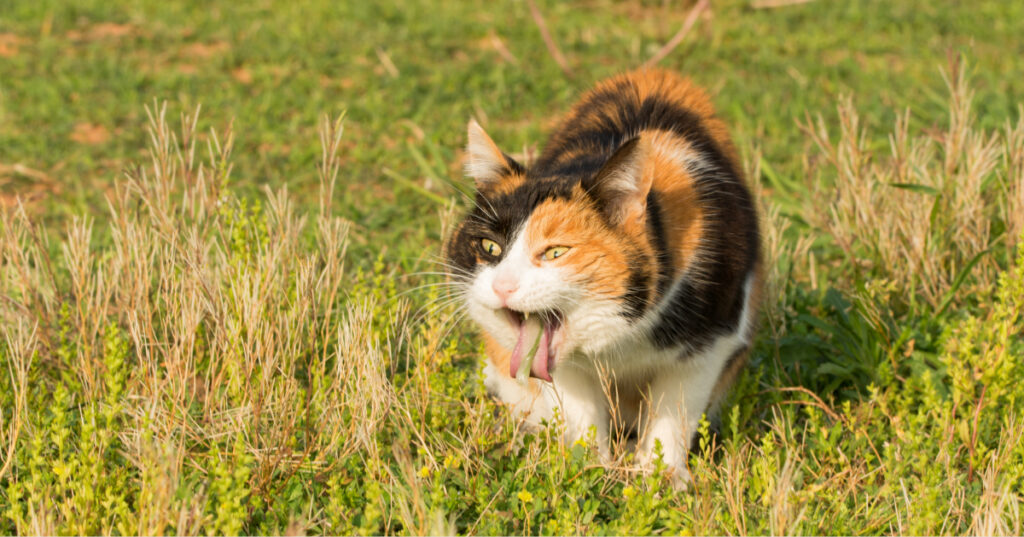
Your cat crouches low, starts heaving, and deposits something tubular and bile-soaked on your floor and your first instinct is probably to wonder why their hairball looks like vomit. Cat hairballs look like vomit because they are expelled the same way: through retching, heaving, and gagging that forces accumulated stomach fur up through the esophagus, often coated in bile or stomach fluid. Rest assured, your cat isn’t sick; their body is doing exactly what it’s supposed to do, but the key word is often. Knowing what separates a normal hairball from a cat vomiting for another reason, which cats are most prone to them, and when the pattern warrants a vet visit can make all the difference in how you respond the next time it happens on your floor.
What Is a Hairball, Exactly?
Cats are meticulous groomers. Every time your cat licks their coat, tiny backward-facing barbs on their tongue catch loose fur, which gets swallowed. Most of that hair passes through the digestive tract without issue. But when hair accumulates in the stomach faster than it can move through, it forms a mass or a hairball.
Why Hairballs Look Like Vomit
A cat hairball isn’t round like a ball at all. It comes out elongated and often covered in bile or stomach fluid, which is why so many owners mistake it for cat vomit. The act of expelling it looks and sounds like vomiting: retching, heaving, and gagging. Technically, it’s a form of regurgitation specific to the digestive system’s response to an irritant, in this case, accumulated fur.
How Often Is Normal?
Most cats produce a hairball once every week or two. Long-haired breeds like Maine Coons and Persians tend to have them more frequently. If your cat is producing hairballs more than once a week, or if the hairball episodes seem to be increasing in frequency, it’s worth a conversation with your veterinarian at Triangle Animal Clinic in Conroe, TX.
Hairball vs. Cat Vomit: How to Tell the Difference
This is where things get confusing for a lot of pet owners. Both hairballs and vomiting involve retching, and both produce something unpleasant on your floor. But there are key differences.
What a Hairball Looks Like
- Tubular or cigar-shaped, not round
- Contains visible hair or fur
- Often wrapped in yellow, brown, or clear mucus
- Usually produced after prolonged retching or gagging
What Regular Cat Vomit Looks Like
Cat vomit that isn’t related to hairballs tends to be more liquid, may contain undigested or partially digested food, and often happens more quickly without the extended gagging you see with a hairball. If your cat is vomiting without producing any hair, that’s likely standard vomiting rather than a hairball issue.
What Causes Cats to Vomit From Hairballs?
When a hairball forms in the stomach, it irritates the stomach lining. The body’s response is to expel it. This triggers a vomiting reflex: the stomach contracts, the esophagus constricts, and the hairball is pushed upward and out. The process can look alarming, especially if your cat is gagging repeatedly before anything comes up.
When Gagging Doesn’t Produce a Hairball
If your cat is retching and gagging but not bringing anything up, don’t assume it’s just a stuck hairball and wait it out. Unproductive retching can signal a blockage, which is a medical emergency. Other warning signs that something more serious is happening include:
- Repeated vomiting over several hours with no hairball produced
- Lethargy or loss of appetite alongside vomiting
- A distended or painful abdomen
- Weight loss combined with frequent gagging
Any of these symptoms warrants a prompt call to Triangle Animal Clinic.
Which Cats Are Most Prone to Hairballs?
While any cat can develop hairballs, some are more susceptible than others.
Long-Haired Breeds
Cats like Ragdolls, Himalayans, and Persians shed more and groom more, which means more hair is ingested over time. These breeds often need more proactive hairball management than short-haired cats.
Cats Who Over-Groom
Some cats groom excessively due to stress, skin conditions, or allergies. If your cat is grooming more than usual and you’re seeing more frequent hairball cat vomit episodes, the root cause may be behavioral or dermatological, not just normal shedding.
Senior Cats
As cats age, their digestive systems slow down. Hair that once passed through easily may now accumulate more readily, leading to more frequent hairballs in older cats.
Can You Prevent Hairballs in Cats?
You can’t eliminate hairballs entirely, but there are steps that reduce their frequency. The goal is to minimize how much loose fur your cat ingests and support healthy gut motility.
- Regular brushing removes loose fur before your cat can swallow it during grooming
- Hydration supports digestive movement; wet food or a cat water fountain can help
- High-fiber diets formulated for hairball control are available and can be effective for cats with frequent issues
Always check with your vet before switching your cat’s food or adding any supplement to their diet.
When Hairballs Become a Health Concern
An occasional hairball is a normal part of life with a cat. But frequent hairball vomiting, difficulty expelling hairballs, or changes in your cat’s overall behavior around mealtime and grooming are all reasons to seek veterinary guidance.
A cat that is vomiting frequently, whether hairballs or otherwise, may have an underlying condition such as inflammatory bowel disease, hyperthyroidism, or a gastrointestinal obstruction. At Triangle Animal Clinic, our veterinary team can help determine whether what you’re seeing is typical hairball activity or something that needs further investigation.
Keeping Your Cat Comfortable Starts With Understanding What’s Normal
Knowing what a normal hairball looks and sounds like helps you recognize when something is off. A cat heaving up a fur-filled tube every couple of weeks is doing exactly what cats do. A cat that’s retching daily, losing weight, or vomiting without producing anything is a cat that needs to be seen.
If you’re not sure whether your cat’s hairball vomiting is within the normal range, Triangle Animal Clinic in Conroe, TX is here to help. Call us at (936) 756-3318 or book an appointment online and get personalized guidance from our team.