
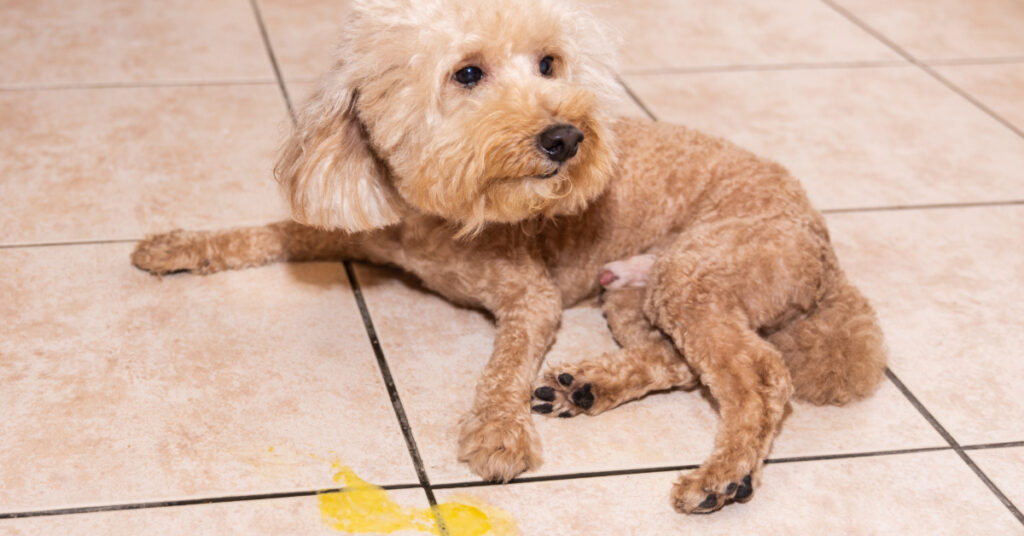
That yellow puddle your dog left on the floor before breakfast is almost certainly bile, a digestive fluid that backs up into an empty stomach and irritates the lining until the body expels it. It looks alarming, but dog vomiting yellow is one of the more common and least serious digestive events you’ll encounter as a dog owner most of the time. The tricky part is knowing when an occasional bout of yellow vomit is just your dog’s stomach reacting to a long overnight fast, and when a pattern of it is pointing to something that needs veterinary attention. That distinction is worth understanding before it comes up again.
What Is the Yellow Stuff Dogs Vomit?
The yellow or yellow-green color in dog vomit comes from bile. Bile is produced by the liver, stored in the gallbladder, and released into the small intestine to help digest food, particularly fats. When a dog’s stomach has been empty for too long, bile can reflux back from the small intestine into the stomach. This irritates the stomach lining, triggering the vomiting reflex.
Why Dogs Vomit Yellow Foam
The foamy texture often seen alongside yellow bile vomit in dogs happens when bile mixes with air and mucus during the retching process. Dog vomiting yellow foam is functionally the same as vomiting yellow liquid, both indicate bile in an empty or near-empty stomach.
What Time of Day Does It Usually Happen?
Dogs vomiting yellow bile most often do so in the early morning or late at night, times when the stomach has been empty the longest. A dog that vomits yellow first thing in the morning and then eats breakfast normally is often experiencing what’s known as bilious vomiting syndrome.
What Is Bilious Vomiting Syndrome in Dogs?
Bilious vomiting syndrome is the most common reason dogs vomit yellow, particularly in the morning. It’s not a disease so much as a pattern: the dog’s stomach empties overnight, bile backs up, and the stomach becomes irritated enough to expel it.
Which Dogs Are Most Affected?
Dogs that eat one meal a day, dogs with longer gaps between meals, and dogs who are particularly sensitive to an empty stomach tend to experience bilious vomiting syndrome more frequently. Smaller dogs and dogs who are highly food-motivated often fall into this category.
How Is Bilious Vomiting Syndrome Managed?
The most common management approach is adjusting feeding schedules, offering a small meal or snack before bedtime can reduce the overnight bile buildup. However, you should consult your veterinarian before making changes to your dog’s diet or feeding routine. What looks like bilious vomiting syndrome can occasionally mask other conditions.
When Dog Vomiting Yellow Is Something More Serious
Occasional yellow vomit in an otherwise healthy dog who eats normally afterward is usually not an emergency. But there are situations where yellow vomit signals a problem that needs prompt veterinary attention:
- Your dog vomits yellow more than once or twice a week consistently
- The vomiting is accompanied by lethargy, loss of appetite, or behavioral changes
- Your dog is also having diarrhea alongside yellow vomit
- You see blood in the vomit with red or dark brown material mixed in
- Your dog appears to be in pain, is hunched over, or has a bloated abdomen
- Your dog is a puppy or senior dog, as these age groups are more vulnerable
A dog that vomits yellow repeatedly or alongside other symptoms needs to be evaluated. Conditions including pancreatitis, intestinal obstruction, liver disease, and inflammatory bowel disease can all cause vomiting in dogs and require diagnosis and treatment.
Other Causes of Yellow Vomit in Dogs
While bile reflux is the most common explanation, dog vomiting yellow can have other causes worth knowing about.
Eating Grass
Many dogs eat grass and then vomit, and the vomit can appear yellow-green depending on how much bile is present alongside the plant material. While grass-eating and occasional vomiting is generally considered benign, habitual grass consumption followed by vomiting may indicate your dog is experiencing GI discomfort.
Dietary Indiscretion
If your dog ate something they shouldn’t have like garbage, a foreign object, or food that didn’t agree with them yellow vomit may follow as the body attempts to empty the stomach. Watch for additional symptoms if you suspect your dog ate something inappropriate.
Intestinal Parasites
Parasites can irritate the digestive tract and lead to vomiting, sometimes yellow in color. Regular parasite prevention and fecal screenings are part of routine preventive care at Triangle Animal Clinic.
Yellow Vomit vs. Other Types of Dog Vomit
Understanding what different types of vomit can indicate helps you give your vet the right information.
- Yellow or yellow-green liquid or foam: Bile in an empty stomach
- White foam: Often stomach acid or saliva; may indicate acid reflux or bloat
- Undigested food: Regurgitation shortly after eating
- Brown liquid with foul odor: Possible intestinal obstruction; seek emergency care
- Vomit with blood: Requires immediate veterinary evaluation
What to Do When Your Dog Vomits Yellow
If your dog vomits yellow once and then acts completely normal including eating, drinking, or playing, monitor them through the day. If it happens again, or if any of the warning signs above appear, contact Triangle Animal Clinic in Conroe, TX. Keep a brief record of when the vomiting happens, what it looks like, and what your dog ate beforehand. This information helps our veterinary team at Triangle Animal Clinic identify patterns and rule out more serious causes quickly.
Taking Dog Vomiting Seriously Without Overreacting
Yellow vomit is one of those symptoms that sits in an uncomfortable middle ground; common enough to seem routine, but occasionally a sign of something that needs attention. Knowing your dog’s normal patterns makes all the difference. A dog who occasionally vomits yellow in the early morning and then bounces back completely is different from a dog vomiting yellow multiple times a week with declining energy.
When you’re not sure, it’s always okay to call Triangle Animal Clinic at (936) 756-3318 or book an appointment online. Our team can help you decide whether monitoring at home is appropriate or whether your dog needs to come in for an exam.