
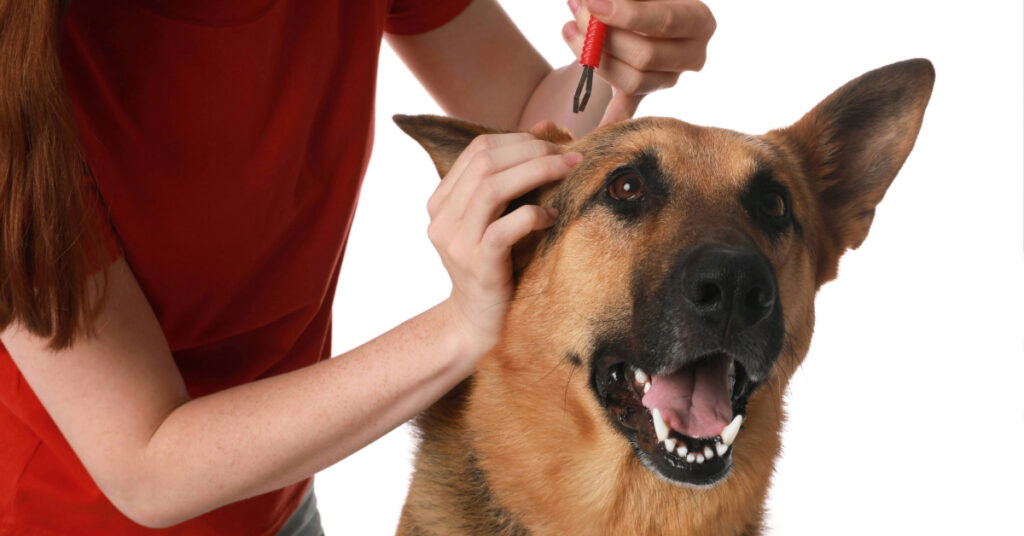
Forget the matches, the nail polish, and the petroleum jelly. To remove a tick from a dog safely, all you need are fine-tipped tweezers or a tick removal tool, a steady hand, and about a minute of calm. Grab the tick close to your dog’s skin, then pull it straight out.
Speed matters, but so does technique. A tick that gets yanked, squeezed, or burned can leave mouthparts behind, and that helps no one. Below, you will find four practical tips on how to remove a tick from a dog, a quick guide to spotting ticks in the first place, and a look at why prevention beats treatment every time. You will also learn when a tick bite is worth a phone call to Triangle Animal Clinic, so you are never left wondering what to do next. Consider this your calm, step-by-step reference for the next time you part the fur and spot something unwelcome.
How Do I Know if My Dog Has a Tick? Where to Look
Most ticks are small, quiet, and easy to miss, so a hands-on check is your best tool. Ticks wait in tall grass, wooded trails, brush piles, and leaf litter, and plenty of them live in tidy backyards, too. They climb onto passing dogs and crawl until they find a spot to attach. After a walk, a hike, or a romp at the park, run your fingers slowly over your dog’s body and press gently. A tick often feels like a tiny, firm bump, and one that has been feeding can swell to the size of a pea.
Check these hot spots first:
- Around and inside the ears
- Under the collar and along the neck
- Between the toes and around the paw pads
- In the armpits and groin
- Around the eyes, lips, and chin
- Under the tail and along the belly
Thick or dark coats hide ticks well, so part the fur as you go. Other clues include a dog that licks or scratches one spot, a small scab, or a red, irritated patch of skin. Many dogs show no signs at all, which is why routine checks matter more than waiting for symptoms.
Make the check part of the fun. Many dogs enjoy the attention, and a slow head-to-tail rub-down after a walk doubles as a bonding moment. If you find one tick, look again for more, because ticks often travel in groups and a dog that picked up one may have picked up several.
Ticks Are Not Only a Summer Problem
In warm regions like southeast Texas, ticks can stay active for much of the year. Make your hands-on check a habit in every season rather than a once-a-summer chore.
How to Remove a Tick From a Dog: 4 Tips
Removing a tick takes less than a minute when you follow a few simple rules.
Tip 1: Gather Your Tools First
Grab fine-tipped tweezers or a tick removal tool, disposable gloves, and a small sealed container or zip bag. Ask a helper to steady your dog, or hand over a treat to keep that wiggly body still.
Tip 2: Grasp Close to the Skin and Pull Straight Out
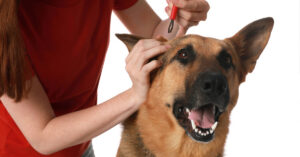
Part your dog’s fur, grasp the tick as close to the skin as you can, and pull upward with slow, steady pressure. Do not twist, jerk, or squeeze the tick’s body. The goal is to lift the whole tick away in one smooth motion.
Tip 3: Skip the Folk Remedies
Petroleum jelly, nail polish, rubbing alcohol, and a hot match do not make a tick let go. They can irritate your dog’s skin and may cause the tick to release more of its contents into the bite. Plain, steady removal works best.
Tip 4: Save the Tick and Check the Spot
Drop the tick into a sealed container or snap a clear photo, since your veterinarian can sometimes identify the species. Wash your hands, then clean the bite area gently with soap and water. Over the following weeks, glance at the spot for swelling or redness.
A few more details can make the process smoother. Good lighting helps, so move to a bright spot or use a flashlight. Work slowly, and talk to your dog in a soothing voice. If your dog is nervous, take a short break and try again rather than rushing. A tick that is removed calmly and completely is far better than one removed in a hurry. Once the tick is out, praise your dog and offer a treat so the experience ends on a good note.
Not sure you can do this safely? If your dog squirms, the tick sits near the eye or lip, or part of the tick stays in the skin, call Triangle Animal Clinic instead of digging around. Your veterinarian can remove the tick comfortably and look over the area.
Why Protect Your Dog From Ticks? Lyme Disease and Other Risks
A tick bite is more than a nuisance, because ticks can carry bacteria that cause serious illness. Ticks feed on blood, and while they feed, they can pass germs into a dog’s bloodstream. Lyme disease is the best-known example, but ehrlichiosis, anaplasmosis, and Rocky Mountain spotted fever also trace back to tick bites. The diseases that show up most depend on where you live, so ask your veterinarian which ones are common around Conroe.
Lyme Disease in Dogs
Lyme disease can cause fever, lameness that shifts from leg to leg, swollen joints, low energy, and a poor appetite. Signs sometimes appear weeks after the bite, and some infected dogs never look sick at all. Because symptoms are vague, a veterinarian is the right person to test for it.
Call your veterinarian if, after a tick bite, your dog shows:
- Fever or unusual tiredness
- Limping or stiff, swollen joints
- Loss of appetite
- Pale gums or unexplained bruising
Even a single bite deserves attention if your dog seems off afterward. Describe when you found the tick and how long it may have been attached, and bring the tick or its photo along. Those details help your veterinarian decide which tests make sense. Early conversations lead to earlier answers, and earlier answers give your dog the best chance at a smooth recovery if an infection does turn up.
Ticks matter for people, too. The same ticks that bite dogs can bite family members, so finding one on your dog is a good cue to check yourself and your kids after time outdoors. Protecting your dog protects everyone at home.
How Can I Protect My Dog From Ticks?
Prevention works far better than treating a tick-borne illness after the fact. The most reliable step is a veterinarian-recommended tick preventive. Options vary, and the right one depends on your dog’s age, weight, health, and lifestyle. Please check with your veterinarian before choosing a product off the shelf, since some dog products are dangerous for cats in the same home. Our team at Triangle Animal Clinic can help you find a preventive that fits your dog.
Pair that preventive with a few everyday habits:
- Check your dog after every outdoor adventure
- Stay near the center of trails and away from tall brush
- Mow the lawn and clear leaf piles and brush from the yard
- Wash your dog’s bedding on a regular schedule
- Schedule routine wellness visits to review your dog’s tick risk
Consistency is the secret. A preventive only works when it is given on schedule, and a tick check only works when it becomes routine. Tie the check to something you already do, such as wiping muddy paws at the door. Within a week or two, it will feel automatic.
It also helps to keep a simple record. Jot down the date you give each preventive and any ticks you find. If you ever need to explain a mystery limp or a sudden dip in energy, that little log gives your veterinarian a clear timeline. And if you are traveling with your dog, ask about tick risk at your destination before you go, since different regions bring different tick species and different diseases.
A Two-Minute Habit That Protects Your Dog
Ticks are tiny, but the routine that beats them is simple. Check, remove, and call your veterinarian when something seems off. Most dogs bounce right back to fetch and belly rubs after a tick comes out cleanly. Knowing how to remove a tick from a dog turns a stressful discovery into a quick, manageable task.
If you ever feel unsure, Triangle Animal Clinic in Conroe, TX is ready to help with removal, preventives, and questions about tick-borne disease, whether you found a tick this morning or just want a plan for the season ahead. Call us at (936) 756-3318 or book an appointment online. Learning how to remove a tick from a dog is a great first step, and a prevention plan is the next one. So here is a question to carry to your next walk: when did you last run your hands over your dog from nose to tail?